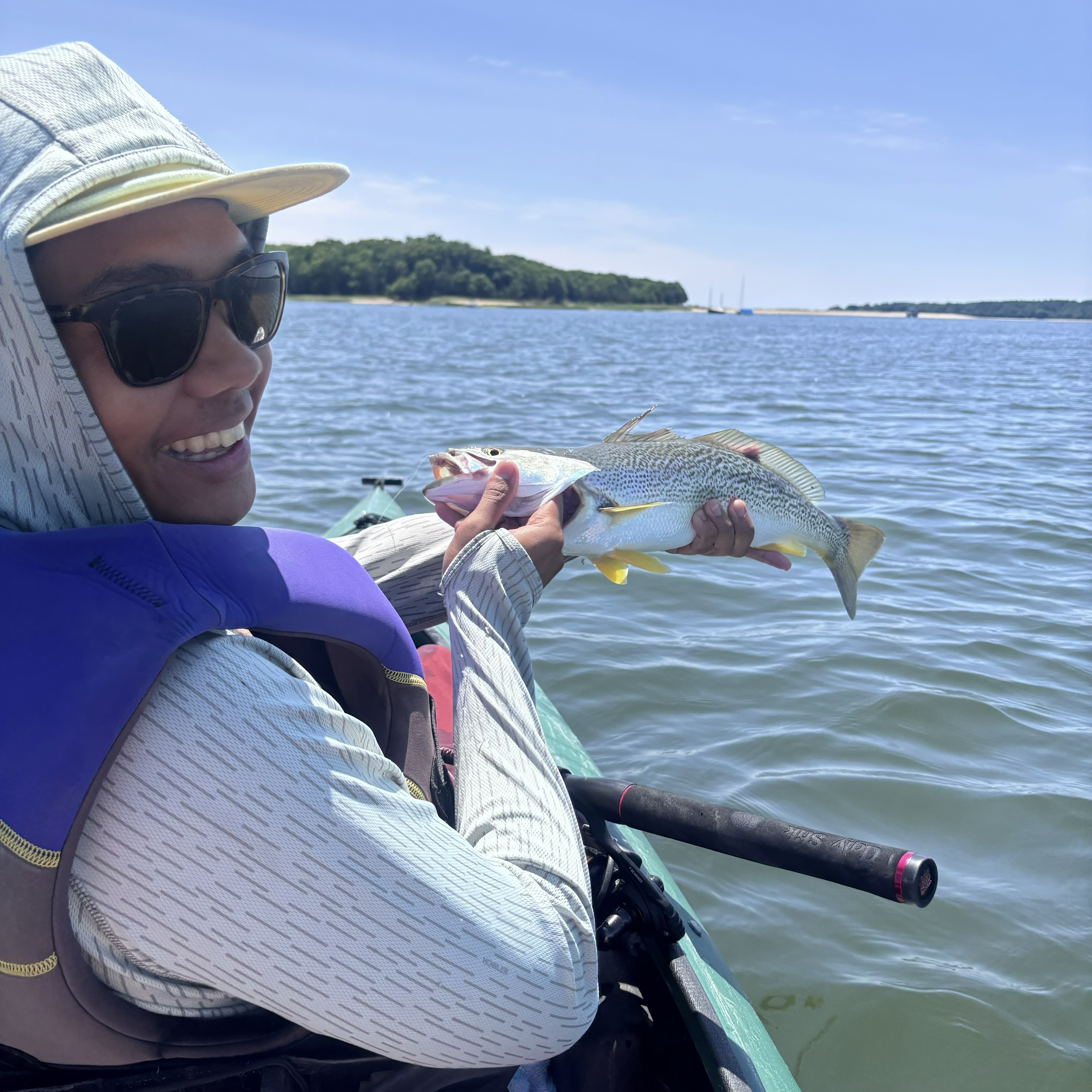
July 23rd was my birthday, and being on vacation in Wareham, Massachusetts, meant only one thing: we were getting on the water. With clear skies and calm summer conditions, Abbie and I launched the kayaks directly off Swifts Beach proper. We didn't have an elaborate game plan—just an eye on the expansive commercial oyster farms dotting the bay, which promised solid structure while keeping us safely tucked away from the busy boat channels.
I handed Abbie a spinning outfit rigged with a soft plastic paddle-tail jig, while I tied on a reliable high-low rig for hammering bottom-dwelling scup. Abbie was hesitant, questioning whether her retrieve speed and jigging cadence were right. Back home in Colorado, presentation is an exacting science—matching hatches, mending line, and dialling in surgical dead drifts. Out here on bigger water, I told her the truth: 'There’s no single right way to do it; you just need to be in the zone at the right moment.' She asked how she’d detect a strike, to which I grinned: 'Trust me, you’ll know.'
She looked doubtful, but barely two casts into her drift, the reel's drag started screaming. I'm used to the opposite, me being able to hook fish consistently and allowing Abbie to enjoy the fight. But it was my birthday, so I quickly took over the rod and could immediately tell we found the right one for the day.
The fish tore off through the current, ripping toward the anchor ropes of the oyster floats and navigation markers. I felt the heavy, sweeping headshakes that screamed schoolie striper. When the fish finally surfaced beside the hull, a long flash of iridescent silver broke through. As I reached to boat it, I stopped dead—it wasn't a striper at all, but a gorgeous northern weakfish (squeteague). In southern waters like Florida, I'd only ever run into smaller specimens, making this broad-shouldered Buzzards Bay squeteague an unexpected trophy.
From there, the high-low rig took over the morning. The scup bite was so furious that we abandoned jigging altogether so both of us could drop bait into the feeding frenzy. Mixed in with the porgies came a feisty dogfish and a small black sea bass, rounding out an impromptu Wareham River inshore slam.
After a midday breather onshore, I pushed back out with cousin Sam to explore the 'secret passage'—a winding, narrow tidal gut snaking back through the salt marsh. The channel ran surprisingly deep, flanked by cordgrass and sheltering terrapins. We worked our way back out toward the deeper rip, picking up steady scup on the drop and daydreaming about what other migratory oddities might slip into this bay before summer closes.