September 3rd started with a familiar Colorado itch: putting a heavyweight tailwater trout on the fly rod. First light found me standing in the Blue River right through the Silverthorne outlet malls, rigged up beneath the pedestrian bridge leading to the Columbia store. Locals and guides affectionately dub this stretch the 'Hollywood Hole'—equal parts prized honey hole and public theater, flanked by shopping footpaths and spectators leaning over the railings.
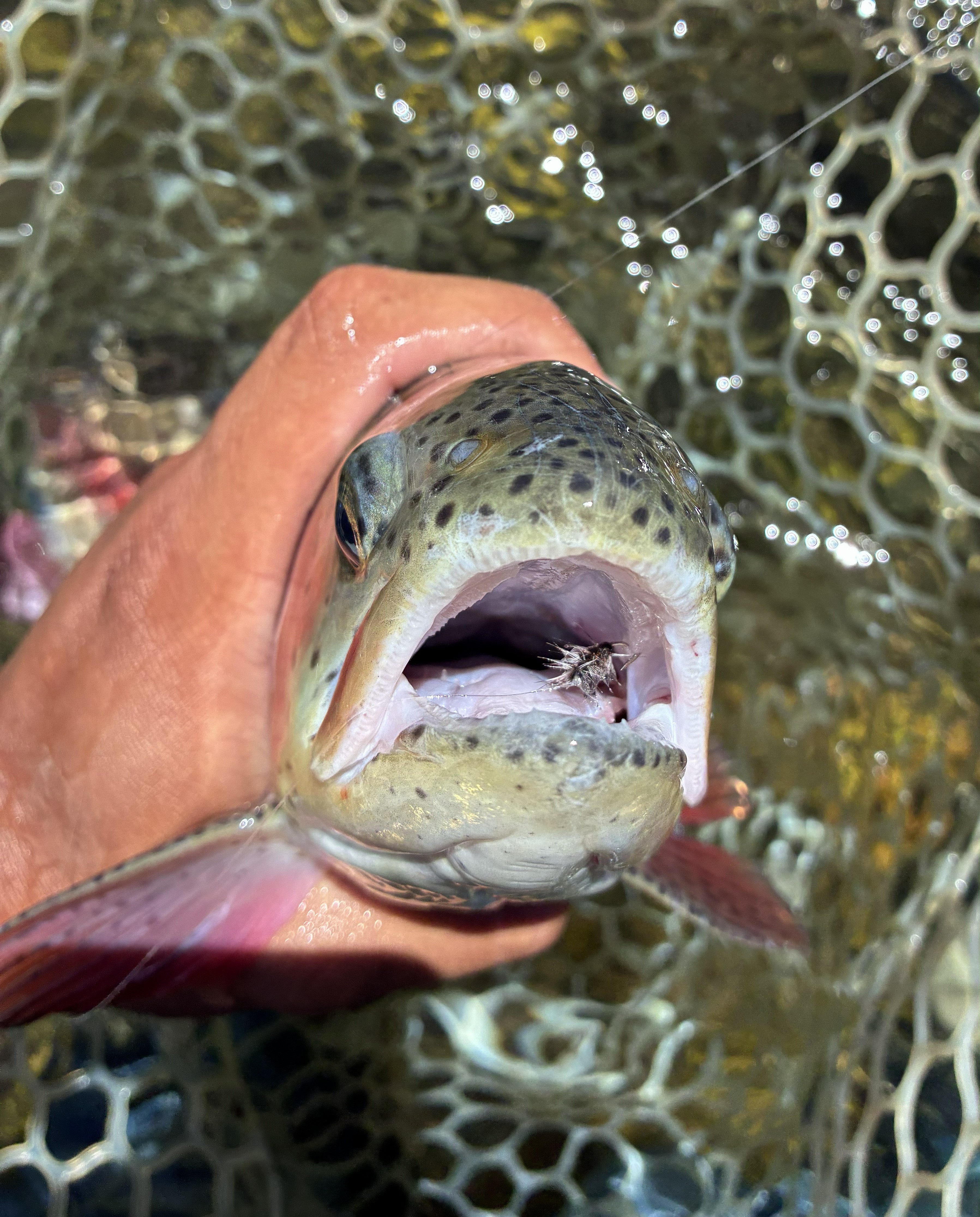
It didn't take long for the tailwater reality to set in. Within minutes, lines were being lobbed over mine and waders were pushing through the seam. While crowding is par for the course here, it still stings to watch prime water get trampled. I backed out of the fray, walked upstream to a quieter pocket, and spotted the unmistakable red band hovering just above the bottom. The fish would delicately rise, but never break the surface. One delicate drift with a size 20 Griffith's Gnat brought a slow, deliberate sip.
Hooked up, the 20-inch rainbow fought with strange resignation—almost swimming right toward the me as if eager to get the unhooking ritual over with. It is wild how heavily pressured tailwater trout adapt their survival playbook, treating a hook set more like a routine inconvenience than a fight for life.
Needing room to breathe, I packed the rod and drove back east over the divide to Georgetown Lake. In terms of foot traffic, Georgetown sees plenty of anglers, but the expanse of open water diffuses the pressure entirely. Stocked fish cruise without the constant barrage of tippet dragging across their noses. The common tactics used, powerbait/live worms, do get refused but small aquatic insects are always on the menu. Another impressive display of trout intelligence, denying the reasonable large protein offering in favor of smaller prey that is less likely to be a trap.
Historically, my routine on Georgetown stayed locked north of the bridge, methodically watching a strike indicator suspended over a classic tandem—a beadhead pheasant tail with a midge dropper—usually waiting ten to fifteen minutes between strikes. Today, I broke routine and prospected south of the bridge.
The payoff was immediate. The south end presented varied depth contours, sharp drop-offs, and stacked schools that tripled my typical hookup rate. Rather than a bite every quarter-hour, the indicator plunged consistently as eager rainbows and occassional browns attacked the nymphs.
Catch-and-release is my default across the high country, but fresh off a summer of delicious saltwater table fare, I decided to harvest one clean stocker for the fire. Back home, that rainbow hit the hot grill grates with lemon and butter—capping off a classic early autumn Front Range day of grit, adaptation, and a hard-earned meal.